The Question We Stopped Asking
By Rhu Strand, Functional Wellness Practitioner and Workplace Wellness Consultant - October 2026
Not that long ago, 'do you have children, or are you planning to?' was a perfectly normal thing to be asked at an interview. Women sat there working out the right answer while the person across the desk made up their mind. We don't ask it now, and thank goodness.
I got my own taste of this at 18. It was the late seventies, I'd just started work, and I was told my trousers were too tight and I was putting the men in the office off their work. Totally inappropriate, even then, and I told them it wasn't my problem, it was theirs.
Looking back, what stays with me is where the problem sat. It was with the people doing the judging, and yet I was the one expected to sort it out.
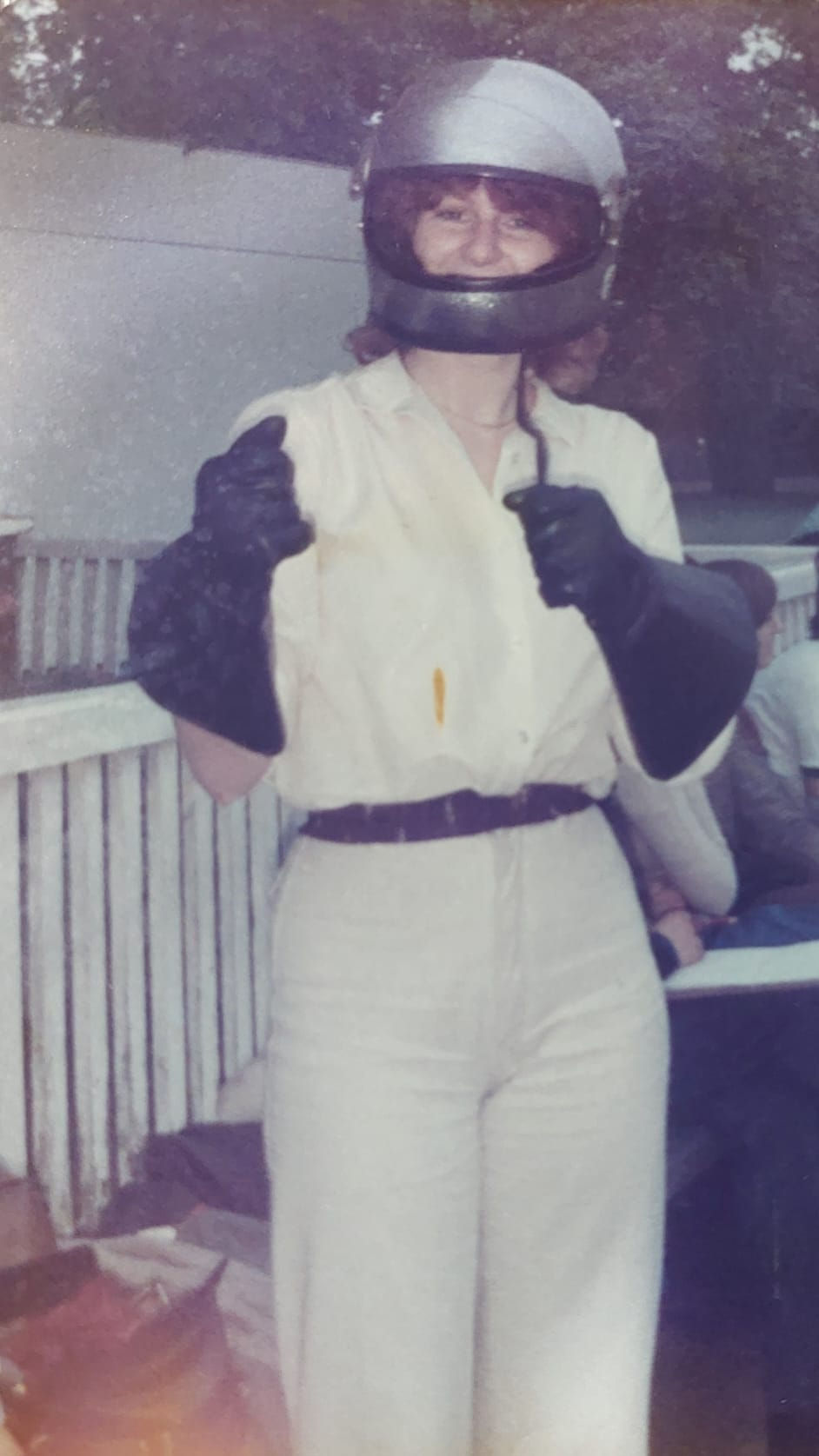
Dodgy old picture of me at 18 in 'those' trousers
We've come a long way since then, which is all good. But I've been thinking about it a lot lately, because I think we could be in danger of tipping the balance the wrong way, and finding a new version of that old question.
Menopause is finally being talked about at work. The legislation is catching up, employers are being encouraged to publish action plans, and women who've struggled on quietly for years are starting to be listened to. I'm really glad. It's why I do what I do.
But being recognised isn't the same as being protected. A business that sees menopause as a stage of life will support the women going through it. A business that sees it as a risk might look at a woman in her late forties and start doing the sums. Will she be off a lot? Will she be hard work? Nobody's going to write that down. It'll just show up in who gets shortlisted and who doesn't.
To be clear, that's a hypothesis, it's not something I've measured. But it is a concern, a thought, and I'd rather say it now than wait and say I told you so.
The small firm problem
A large employer has an HR team, a structured interview, someone trained to spot this sort of thing. I worked in HR, so I know how much of the protection comes simply from having a proper process. A small firm often hasn't got any of that. The person hiring is the owner, or the office manager who also does the invoices and orders the tea bags, and it comes down to a chat and a feeling about who'd fit in.
The Equality Act 2010 applies whether you've got ten people or ten thousand. The safety net just isn't the same size.
Most small business owners I meet want to do the right thing. They're simply doing about forty jobs at once.
Where andropause comes in
If hormones only ever get talked about as a women's issue, then women are the ones who get looked at. Every conversation points the same way.
But hormones aren't just a women's thing. Men go through their own change as testosterone slowly drops over the years. It doesn't always show up the way menopause does, and I'm not saying the two are the same. What I am saying is that we're all human, and at some point we all go through 'something'. If a workplace understands that, there's no single group to pick out. Menopause becomes part of the ordinary picture of working for forty-odd years, rather than something that marks women out.
Stress comes into it too, and it doesn't care who you are. If you're under pressure for long enough, and that can be within the workplace or externally, your body doesn't know, it just keeps pumping out cortisol, and that can get in the way of your hormones, whether you're a woman in her forties or a man in his fifties. In men it can pull testosterone down. So a stressful workplace is affecting everyone's hormones, not just the women's.
Doesn't that take the focus off women?
I know that's the worry, and I've heard it said, in fact it was said to me when I auditioned for a Tedx talk about my Hormonal Phase Gap. Women waited a long time to be heard and nobody wants to see that watered down. I see it the other way round. Women are better protected when menopause sits inside a wider understanding of hormones than when it stands on its own as a label somebody can use against them.
What a level playing field looks like
I'm not a lawyer and this isn't legal advice, but it doesn't need to be complicated. Ask every candidate the same questions. Make sure whoever's doing the hiring has had the same training, whether that's a manager in a big firm or the owner of a small one. Know what you actually need to ask to judge someone for the job, and leave the rest alone. And offer menopause support to everyone who works for you, instead of keeping a quiet eye on the women of a certain age.
We worked out, eventually, that what you ask and what you assume decides who gets a fair go. It took a long time and a lot of unfair interviews. This time, we can see it coming.
If you're an employer, big or small, and you want to get this right from the start, that's what The Phase Partnership is for. Find out more here.
Rhu x


Comments